Something to know about me: I’m a dog person, through and through. Dogs are loyal, helpful, and smart. I’ve got four of my own at home, and one very special quadruped who lives at Stellix headquarters.
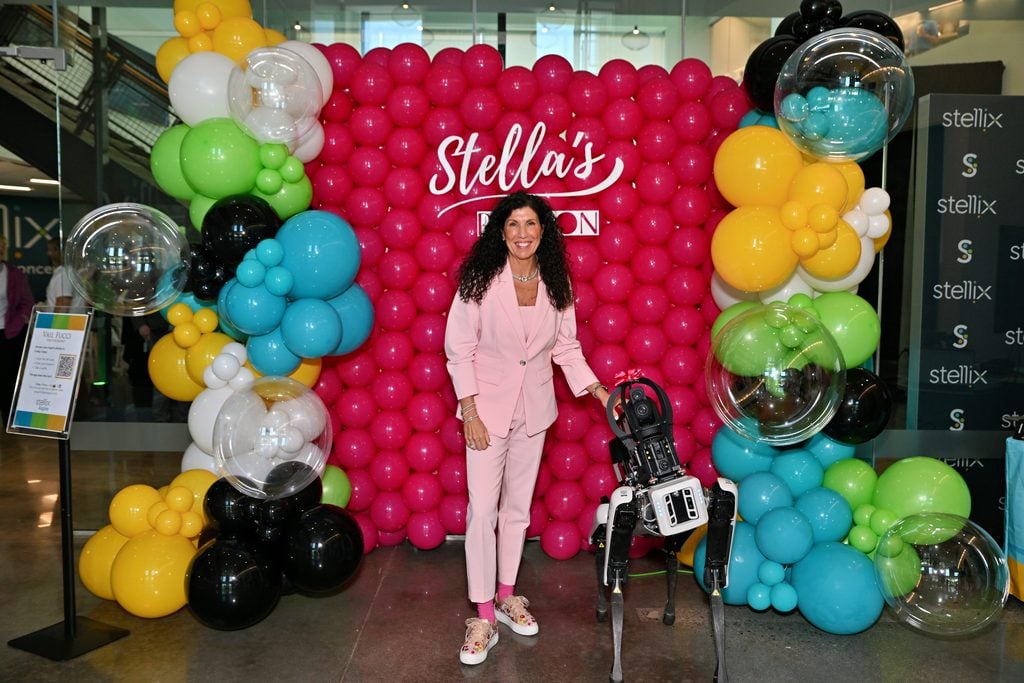
If you haven’t met Stella, our customized Boston Dynamics SPOT robot, she’s a whole vibe. Our company’s mascot, Stella has her own merchandise line and her own TikTok channel. She’s really, really fun, but all of that is (mostly) beside the point.
Because what Stella represents, and why we brought her into our organization just over two years ago, is a physical manifestation of operational transformation. What it looks like when Industry 4.0 technologies, with AI capabilities wrapped around them, are embodied in a robotic colleague with very real applications for manufacturing.
Case in point: Stella has visited dozens of customer sites, and when she walks the floor, she’s always working. Her capabilities, including acoustic sensors and a thermographic camera, can detect small abnormalities that even the best human teams might miss. On a recent visit, she detected an air leak in a customer’s compressor room. The team looked at each other, “No way.” But they did the due diligence to confirm and…Stella was right. She found a problem before anyone else could see or hear it. Not only that, but the team was able to focus on repair work instead of detection.
I could show you 10,000 slides about the set of capabilities that Stella carries, but a single example in a live manufacturing environment is far more powerful.
Now imagine a plant where the team receives a list of exceptions and immediately puts their energy into addressing them. Their robotic colleague handles monitoring and detection, freeing up the humans to work more efficiently. Together, this hybrid team is more proactive, quicker to respond, and continuously drives toward operational excellence.
An Organization on a Journey
Although Stella just turned two, in dog years she’s 14, and that age more accurately sums up the journey we’ve been on with her during that time.
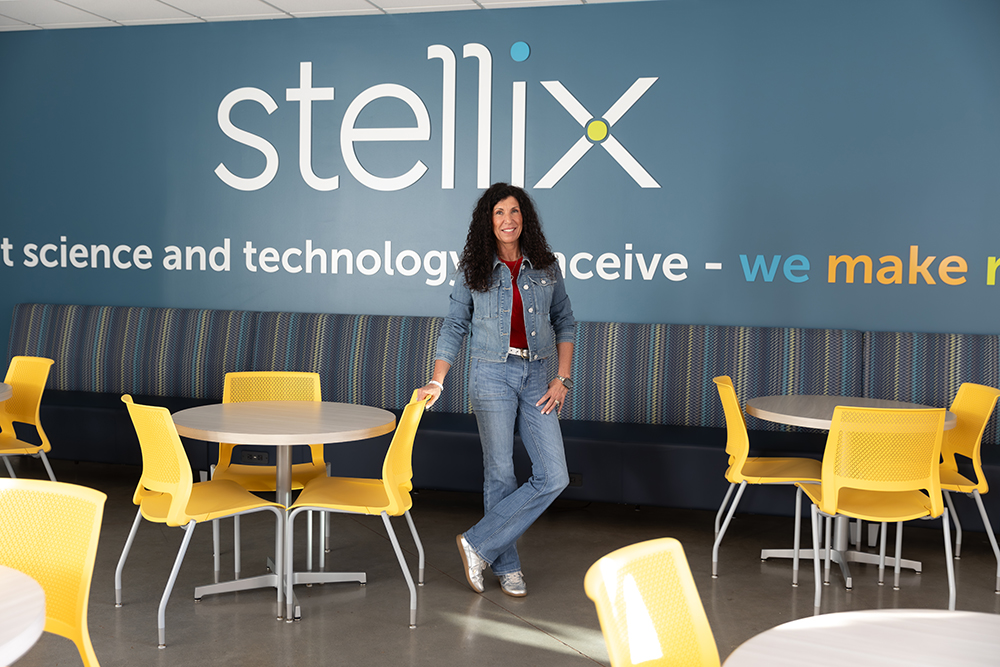
Foxburough MA, June 6, 2026 for Stellix Aspire, Photo by Jeff Pinette
When we first brought Stella into the organization, I wanted her as a demonstration tool, to show people that you need to connect technology with its ability to impact work. Our industry has a track record of throwing technology at problems that tech alone can’t solve. Stella helps us address that issue by putting operational transformation into the context of real-world circumstances.
But I didn’t anticipate how much operational transformation itself would change, across automation, digital solutions, and AI, in such a brief period of time. The explosion of AI agents in the last 24 months has reshaped our conception of Stella, and we now most often refer to her as “physical AI.” As the field of what’s possible continues to expand, the capabilities required to bring solutions to life become more complex and interconnected.
When we deploy Stella today, we need a team comprising a reliability engineer, instrumentation engineer, wireless network engineer, robotics engineer, app software developer, data engineer, generative AI specialist, and a handler who has completed the Boston Dynamics training intensive. The composition of Stella’s team, and the way they have to collaborate cross-functionally, required dramatic changes in their habits, processes, and communication. Integrated technologies aren’t bolted on or sequenced in a set order; they are in dialogue with one another, and the teams deploying them have to work differently, fusing their knowledge and skills together into a capability that delivers on outcomes.
You can’t underestimate, although I admittedly did, the change management required during that kind of shift. We introduced Stella internally before she began her grand tour of customer sites, and we encountered a wide range of reactions. Some team members saw her and instantly understood: she’s physical AI, she’s operational transformation made real, she’s a catalyst for thinking differently about what’s possible in our industry. Others thought she was an expensive toy, saw her greeting guests at our headquarters as a gimmick. Everyone has their own journey with change, and every group has both early adopters and skeptics.
If I could do it again, I’d give the team a more focused introduction to Stella and communicate my vision around her more clearly. Though part of that vision was intentionally hazy; we needed to work with Stella to help us understand what she could be—what my colleague John Seffernick describes as setting a North Star without having the full roadmap of how you’ll get there.
Ultimately, the more detailed and specific we were about what Stella could do, and importantly, how she could do it, the more her whole project resonated with our team, especially the engineers (always know your audience). As we discussed the different components, payload abilities, instrumentation options, databases, and application opportunities, we saw our employees begin to connect the dots.
There are still folks who aren’t 100% comfortable with Stella walking up the stairs next to them, or making the rounds at headquarters, where she supports fire safety inspection, leak detection, and a study to make our building more energy efficient. Individual change has to happen on its own timeline. But after 6-9 months, we had built up a critical mass of people who embraced our robotic mascot, which has tipped the scales into an organizational shift.
What’s Next for Stella
While Stella’s potential is recognized, we still have some ground to cover when it comes to large-scale implementation of semiautonomous quadruped coworkers. I anticipate a fleet of SPOT robots across life sciences and industrial manufacturing facilities within the next few years, supporting teams with reliability and maintenance, safety and compliance, and other operational directives. Further off, but I hope not by too much, is the ability to bring quadrupeds out of the “dirty” areas and into “clean” areas for biotech manufacturing.
The early adopters are already adjusting course. We have a customer using Stella to run autonomous missions through their water plants. They’ve encountered some obstacles because there are areas she can’t navigate and are now reevaluating their design strategy for new builds to ensure future facilities can accommodate this kind of technology. Rethinking entire capital projects with physical AI in mind. It’s pretty awesome to see the change in thinking, and the resulting change in action, at such a big level.
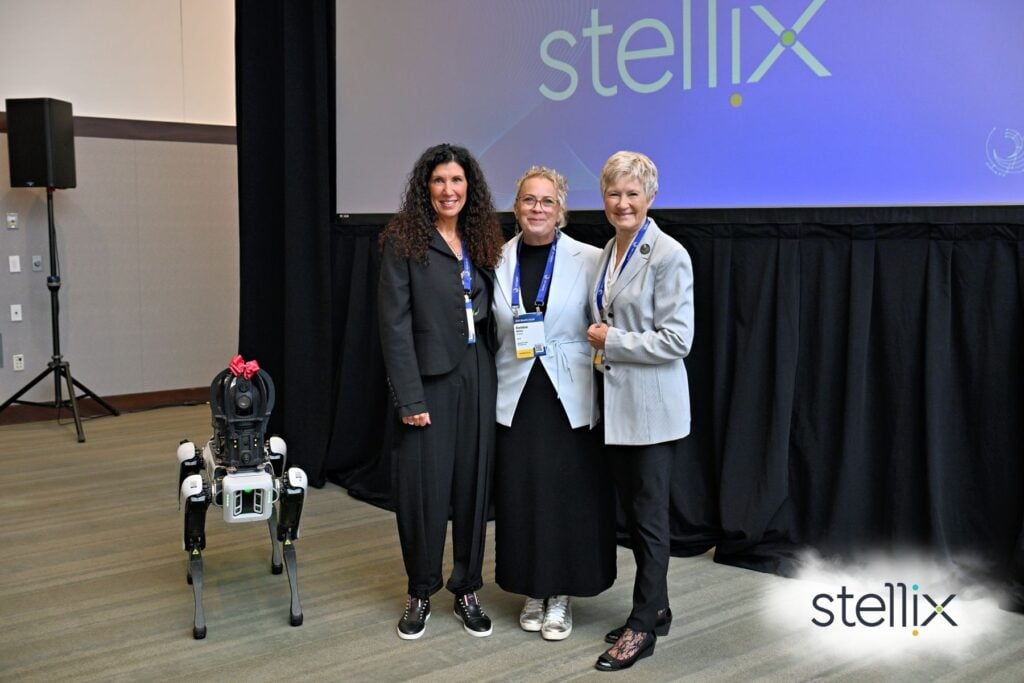
Stella accompanied me to a number of events during Boston AI Week this year, and her presence is more valuable than ever. As physical AI starts to feel less like science fiction and more like our near-future state, an unassuming robot dog with a blue bow is the perfect vehicle for unlocking innovation—with warmth and openness instead of fear. She builds trust quickly, and in the example of detecting an air leak during a customer visit, delivers value quickly as well. When we bring Stella to a customer site, or a networking event, or a school classroom, she literally brings people together: up from their desks, out of their offices, gathered side by side. Community has always been a precursor for our best ideas, and nothing lights me up like seeing Stella at the center of a group of people who start wondering, “What else is possible?”