Blog
We Know AI Matters.
How Do We Make It Work?


How Do We Make It Work?
“Does AI matter?” That was the question that dominated conversations earlier this year, at our spring Aspire series event. At our most recent fall event, I didn’t hear it asked once. Leaders know AI matters, and now they want to know how to make it matter for their organizations: how to connect AI, data, automation, and people to an outcome that matters in a live operating environment under highly regulated conditions.
Our goal for October’s Aspire event was to share what we’ve learned and get people thinking at a larger scale about the challenges and opportunities in front of them. It was our most interactive Aspire so far. The theme, Connection to Capability, shaped the core of the afternoon. Attendees started with an outcome they wanted to improve, then moved through four stations, each demonstrating a capability needed to get there:
OpsCore is Stellix’s engagement model for connecting a desired business outcome to a governed path forward. At this station, attendees saw how their own outcome and current state become KPIs, a capability mix, a roadmap, and a clear engagement path.
This outcome-first approach provides a more useful starting point for operational transformation. Instead of asking, “Which technology should we use?” we asked, “What do you need to improve, and what would success look like in your operation?” That changes the conversation from a product discussion to a shared problem-solving discussion. The technology matters, but it must serve the business case and work within the context of the operating environment as well.
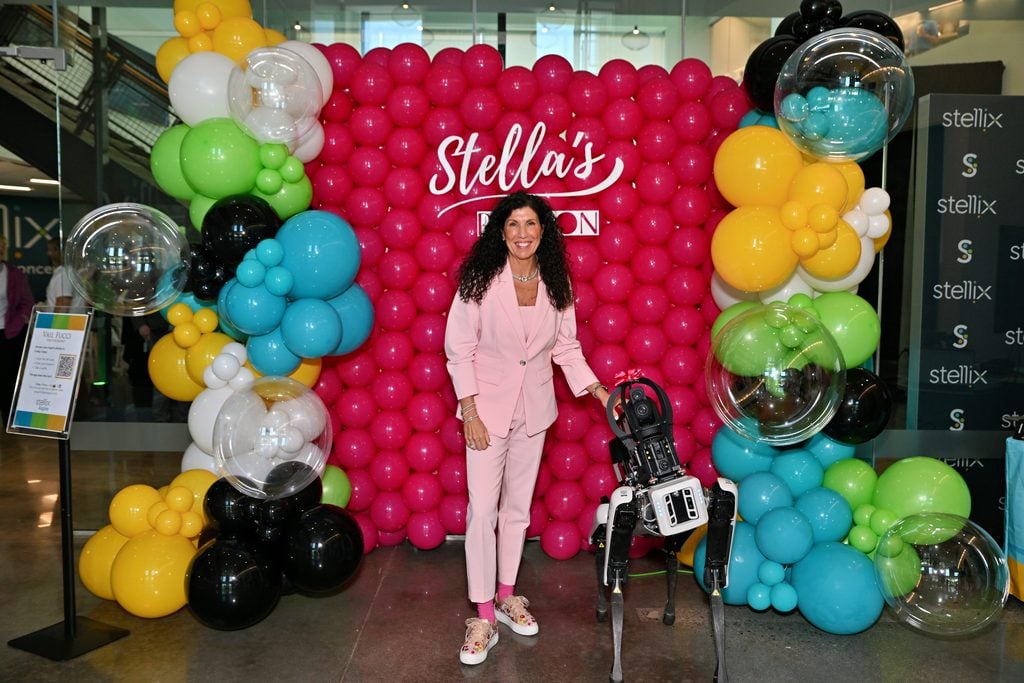
Stella is our customized Boston Dynamics Spot robot dog, our company mascot, and our clearest example of physical AI: robotics, sensors, and AI working together. In her first two and a half years, Stella has met hundreds of people, visited dozens of customer sites, and settled into regular inspection rounds at our headquarters.
A demonstration should open a conversation about what becomes possible, what needs to be true for it to work, and how we would prove its value in a live environment. At Aspire, Stella’s presence made ideas feel tangible. The value was not simply seeing a robot in action; it was seeing how robotics, data, integration, reliability, safety and human workflows can come together around a practical outcome.
This station explored the data, infrastructure, and integration connected operations to deliver results. Visitors traced a single operational event from raw signal to contextualized, governed, decision-ready data, making AI’s often invisible data foundation tangible.
When AI pilots stall, the underlying causes are typically siloed systems, inconsistent identifiers, and missing context. Data readiness has become a differentiator. Organizations that compound value fastest will treat plant and lab data as governed products from day one: connected at the source, modeled with meaning, moved as events, and owned by specific team members.
This station showed how Stellix is changing the way it works, including our own journey toward becoming an AI-first organization. Sharing that story mattered because credibility starts with how we work ourselves. We are asking customers to connect strategy, systems, and people, and to keep learning as conditions change. We need to hold ourselves to the same standard.
My colleague John Seffernick has written about how we treat AI as an operating strategy rather than a tool. And while we have seen some concrete results, we are also working through adoption, context, governance, and cost in real time. Transformation is not a finished state. It is a continuing effort to connect our expertise, improve how we collaborate, and make better use of knowledge and tools so we can serve customers more effectively. We are still learning, and we want to be candid about that.
One of my biggest takeaways from the event was that the questions being asked have become highly specific. Our team fielded queries about how to prioritize digital portfolios, establish a reliable data foundation, build trust in AI, and connect technology decisions to business value. These questions reflect a growing maturity around AI, even if the market has not yet arrived at all the answers.
The most pointed questions were about trust. I was surprised by how clearly participants distinguished between an impressive demonstration and a capability they would trust in their own day-to-day operations.
Trust starts with strong foundations: useful, contextualized data; clear governance; and a practical understanding of where AI belongs in a workflow. Technology is moving quickly, but organizations still need to bring business, IT, operations, and quality into conversation with one another to ensure alignment for any new capability.
My other big takeaway was that leaders are aware of and eager to close the gap between their ambition around AI initiatives and the realities of execution. They are managing multiple digital initiatives and need a clearer way to prioritize them, understand the value they will create, and coordinate the people and systems involved. The next stage requires choosing the right use cases, involving the right people, implementing appropriate governance, and proving that initiatives improve outcomes.
I remain highly optimistic about AI, but perhaps in a more grounded way than before. Extreme focus must be put on designing the right operating model, building trust, supporting adoption, and staying accountable after launch. Successful organizations will pair ambition with intense operating discipline to drive results.
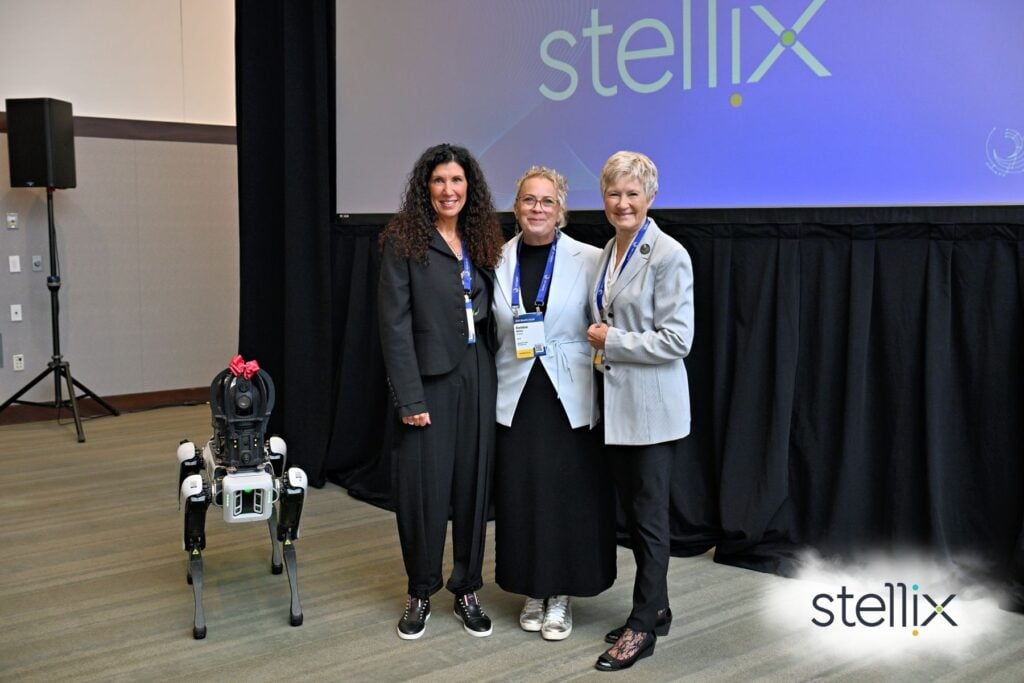
Although our focus is on the life sciences community, there is much to learn from how people are applying AI across industries and sectors. Our partnership with Women Applying AI (WAAI), a nonprofit global community of AI practitioners focused on the practical adoption of AI, brought a broader range of perspectives into the room. The partnership created space for peers, practitioners, and leaders to exchange ideas and build relationships around a shared interest in applying AI responsibly and usefully. As WAAI’s Physical AI Mission Partner for 2026/2027, we share a goal of seeing AI widely applied and reliably run in regulated operations.
We are grateful to WAAI for helping us bring this community together and for extending the conversation beyond this event.
I hope attendees take back from Aspire one clear outcome they want to move in their organization, along with a practical way to begin. Start with the business or operational result. Understand the current state. Bring the right people together. Then choose a focused use case, define how success will be measured, and build in the governance and support needed for adoption.
You do not have to choose between running the business and changing it. The opportunity is to make change work inside the business, so new capabilities improve performance without compromising the operation. As we continue to evolve the Aspire series, I expect we’ll lean into shared learning, proof in real operating contexts, and stronger connections between people working on the same challenges. The measure of success is our ability to move organizations from AI ambition to reliable, governed outcomes. I’m confident that together, we’ll find our way.