FY25 was a successful year for Stellix, but the road to success often feels bumpy. There was a time when I might have been afraid to admit that, but experience has taught me to accept it.
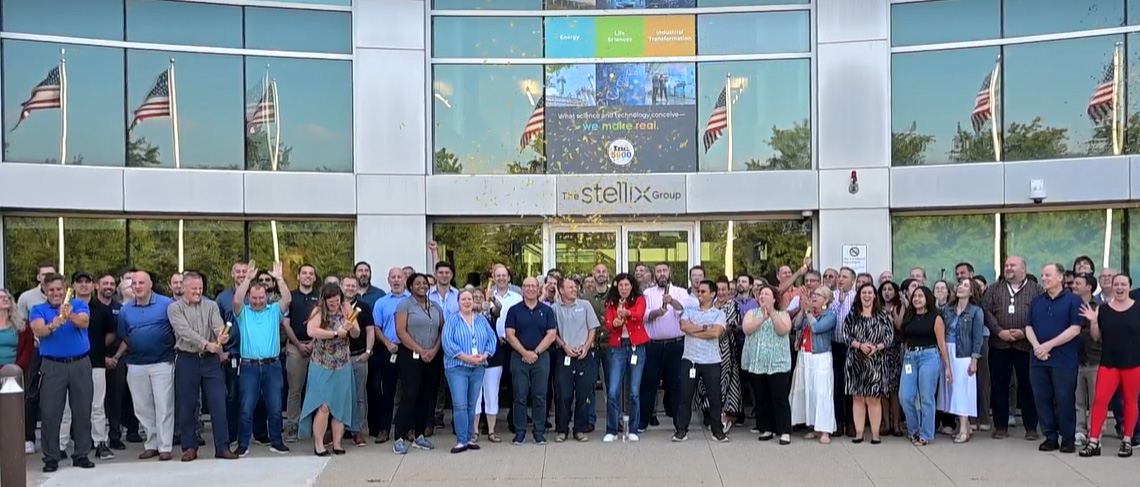
Stellix made the Inc. 5000 list of fastest-growing companies for the third consecutive year. Our revenue rose 68% from 2021 to 2024, and our headcount has more than doubled from about 200 to 500 people in the same time period. I’m extraordinarily proud of that growth and of the team who made it happen.
I also know that growth means change, and change is almost always hard. Add in the pressure to keep pace with the speed of AI innovation and to be a leader in digital transformation, and it makes sense that the year felt challenging.
Too often, leaders only share their carefully curated highlights. I’ve been guilty of that myself. But I’ve learned that there is value in accepting the difficulties of leading an organization through growth and change. Even more valuable is reflecting on and learning from those experiences.
What 2025 Taught Me
I learned so much in 2025, and for that I am grateful. Here are a few of the lessons I’ll be taking with me into 2026.
1. Cross-functional alignment is critical
Aligning people, processes, and technology internally hasn’t been easy, even for a company like ours that excels at doing this same work for clients. We saw firsthand the limits of functioning in siloes. Despite working toward a set of shared goals, our internal departments often ended up disconnected from one another; the interdependencies between them weren’t strong enough.
We made progress in this area by creating cross-functional transformation teams around four themes we wanted to develop in the business: digitize, innovate, organize, and grow. The teams comprise people from all areas of the company who come together to solve problems horizontally rather than in their own lanes. There are no executives on the teams, which allows for a bottom-up structure and encourages leaders to listen to the people closest to the day-to-day work.
2. Traditional goal-setting isn’t always ideal
For years, we used a familiar goal-setting model based on Objectives and Key Results (OKRs): executives set the company goals, VPs translated them into departmental goals, and teams broke those goals into individual parts they could execute on. At a certain point, that model stopped working as well as it once did.
This breakdown occurred in part due to a lack of cross-functional alignment. (Are you seeing a pattern here?) As the company grew, it became challenging to map out all the inputs from multiple departments. Dependencies weren't always obvious; timelines didn’t always add up.
With each department working on only specific goals, there was also a general sense of being disconnected from the overall outcomes. People were doing the work, but they couldn’t always see what it led to, and they lacked the context necessary to provide their insights and feedback on reaching the desired outcomes.
For everyone across the organization—not just at the top—to start viewing goals as interconnected and outcome-based, we needed to incorporate goal-setting that would instill greater ownership at all levels and encourage collaboration. Teams are now coming together to think about how to solve a problem or pursue an opportunity, then bringing their proposals to leadership instead of the other way around.
3. Systems are the foundation of the future
Like many leaders, I tend to view the future from a visionary lens: what can digital transformation or AI do for the business? But the engineer in me knows that for the vision to become a reality, you need the right systems in place.
In our quest to be at the cutting edge of innovation, we had to take a step back to rethink how we worked. That meant some of our early goals around digital transformation and AI focused less on executing major initiatives and more on building the infrastructure to support them.
It can be frustrating to slow down when the pressure to move fast is high. But companies that don’t figure out how to integrate AI holistically across their organization will have a hard time progressing from surface-level AI usage to true AI readiness, from experimentation to transformation.
4. Connecting is harder than ever
Some of the biggest breakthroughs of my career didn’t come from a scheduled meeting. They came from the impromptu side conversations—the kind that are easiest to have when sharing space with colleagues and clients.
Hybrid work has made those interactions harder to come by. Long-time colleagues who have built trust and rapport in person can typically maintain it from a distance. (The remarkable story behind the development of Moderna’s COVID vaccine is a testament to that.) But fast-growing organizations are always adding new people—people who don’t have years of context or informal touchpoints to fall back on.
To keep pace with innovation, leaders must be intentional about bringing people together in ways that help them build the relationships that we all once took for granted. I’m still not sure exactly what that looks like, but it’s something that’s constantly on my mind.
Applying These Lessons in 2026
When I think about how to apply the lessons I learned in 2025, one of my takeaways is that you can check all the boxes, but none of that matters if you don’t reach the desired outcome. True value is derived from outcomes.
In more predictable times, leaders can focus on controlling the inputs and be reasonably confident that the expected outcomes will follow. These days, not so much. The pace of change is faster, the variables are more complex, and even well-informed decisions don’t always yield the results we expect.
As leaders, it’s our responsibility to navigate this uncertainty. To apply our experience and judgment while at the same time accepting that we’re placing some risky bets. All we can do is make the best possible decisions with the information available at the time.
Some of these attempts will feel like experiments; others will feel like failures or mistakes. So, we must be resilient. Transformation and growth are inherently risky. However, many times we fall down, we have to be willing to get up and try again (it may be cheesy, but it’s true). RESILIENCE is critical in transformation and innovation creation.
Enduring success isn’t an endless string of wins, one right after another. It’s a series of peaks and valleys and everything in between. I’m comfortable admitting that 2025 felt bumpy at times and thankful for the lessons I’ve learned and for the team at Stellix
With those lessons in mind, I am optimistic heading into 2026. The work that awaits won’t be easy, but I trust that it will lead us to a future of more growth and greater transformation.